
Marriage, Betrayal, and Loyalty
The Glass RoomThis flow traces Hana’s marriage to Oskar through affairs, persecution, separation, and Hana’s enduring grief for him.
increasing Bearing strength in each event
 decreasing
Bearing strength in each eventdecreasingA Marriage with Freedom

Love Without Possession
Oskar’s understanding
Hana and Oskar maintain a marriage that allows considerable independence. Oskar knows of some of Hana’s affairs and is willing to let her go if another relationship is what she truly wants.
His generosity stands in contrast to the possessive behavior Hana encounters elsewhere.
A deep attachment
Hana’s irreverence does not cancel her love for Oskar. His patience and readiness to remain present become central to her understanding of what care means.
The Confession of an Affair

Desire and Consequence
A lover’s demands
Hana’s relationship with Miroslav Němec becomes emotionally consuming, even as he remains tied to his wife. When he chooses his marriage, Hana is left grieving the limits of the affair.
She recognizes that sexual freedom does not protect her from heartbreak.
Oskar’s response
Oskar does not retaliate or try to control Hana. His willingness to remain available deepens her loyalty to him, even as their relationship contains unequal secrets.
Persecution Enters the Marriage
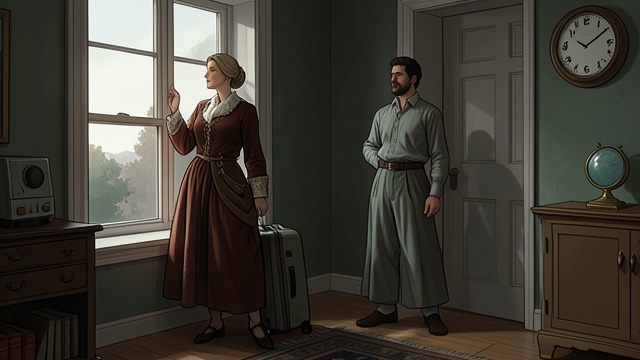
Private Love Under Racial Law
Oskar’s vulnerability
Oskar’s Jewish identity makes the couple vulnerable to persecution, property restrictions, and arrest. Hana understands that laws can criminalize relationships and endanger a household.
Her earlier confidence in personal freedom is tested by a state that intrudes into private life.
A history of separation
Hana and Oskar are eventually arrested. She loses contact with him, and their marriage is broken not by a freely chosen separation but by state violence.
Oskar’s Deportation

The Last News
An uncertain end
Hana learns that Oskar is held in Terezín and later sent to Auschwitz. She does not witness his death or receive a full account of it.
The lack of certainty turns grief into a long period of waiting and retrospective knowledge.
Love in memory
Hana later calls Oskar the only man she ever loved. Her confession recognizes both her betrayals and the depth of their shared bond.
After the Camps
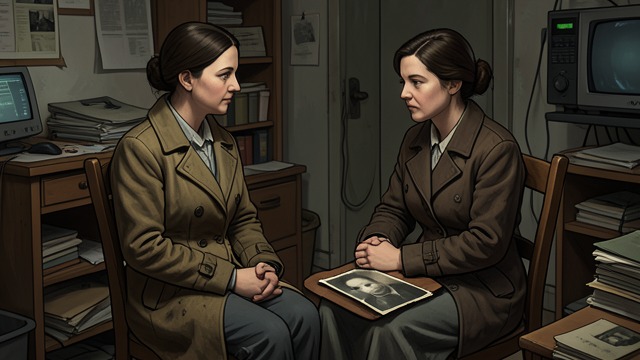
Survival Without Reunion
A life after loss
Hana survives Ravensbrück but returns without Oskar. She rebuilds a life in Město, carrying private grief through political changes and decades of separation from Liesel.
Her public humor does not reveal the losses she rarely discusses.
A new witness
When Hana tells Zdenka about Oskar, the story makes visible the difference between the life she survived and the cheerful persona others see. Memory becomes a form of fidelity.
Before the Nazi occupation
During the years before the occupation
During the Nazi occupation
After Oskar is sent to Terezín
In the postwar years and 1968
